Nutrition
Is Tofu a Complete Protein?
By VeganRecipesHub Editorial Team · Updated Oct 18, 2026
Yes, tofu is a complete protein. Here is what that means, how much protein it has, and how to cook with it.
What makes a protein complete
The body cannot make nine amino acids: histidine, isoleucine, leucine, lysine, methionine, phenylalanine, threonine, tryptophan and valine. A complete protein supplies all nine in useful amounts. Most animal foods do, and so do a few plant foods. Soy is the best known of them.
How much protein is in tofu
It depends on the type, because softer tofu holds more water. As a rough guide, silken and soft tofu has about 5 to 8 g of protein per 100 g, while firm and extra firm tofu has about 10 to 17 g per 100 g. Brands differ, so check the label on your pack.
Do you need to pair tofu with anything
No. Tofu does not need rice, beans or any other food alongside it to be complete. Your body also pools amino acids across the day, so you do not have to balance every single meal.
Other soy foods that are complete
Tempeh, edamame, soy milk and soy yogurt are made from soybeans too, so they are also complete. Seitan is different. It is made from wheat gluten and is low in lysine, so it is not a complete protein.
Easy ways to cook with tofu
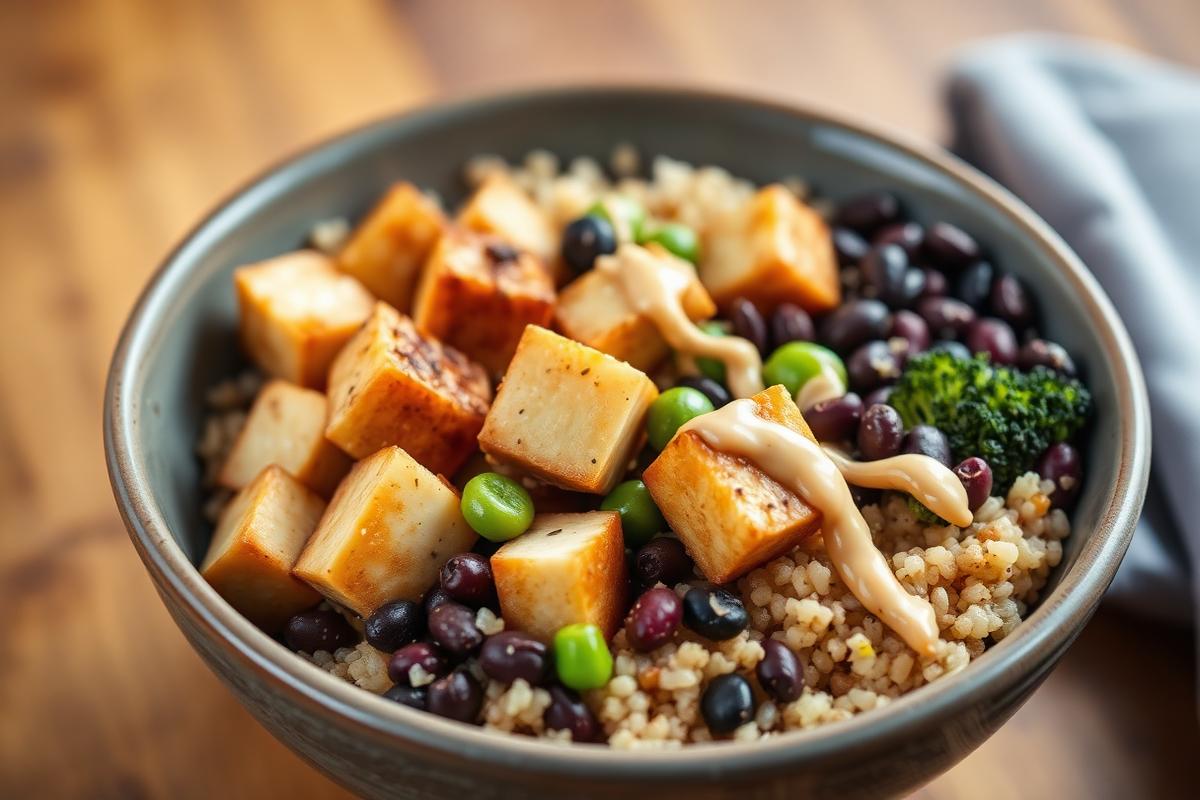
Press firm tofu for 15 minutes before cooking so it browns and holds a filling. Crumble it for a scramble, blend it for creamy fillings, or cube and bake it for bowls. Good places to start: our Savory Tofu Scramble and our Vegan Quiche. More high-protein ideas are in the protein recipes hub.
Common questions
Is silken tofu a complete protein too?
Yes. It is the same soy protein, just with more water, so you get less protein per serving than with firm tofu.
Is tofu enough protein on its own?
It gives a solid amount per serving, especially firm and extra firm tofu. Most people also eat beans, lentils, grains and nuts through the day. See the full complete protein guide for more foods.
Does cooking change the protein in tofu?
Not in any way that matters for cooking at home. Baking, frying and simmering all keep it a complete protein.
Related
Sources and further reading
- Protein — Harvard T.H. Chan School of Public Health, The Nutrition Source
- Dietary protein quality evaluation in human nutrition — Food and Agriculture Organization of the United Nations (FAO)
- Nutrition information about protein and plant-based protein — British Nutrition Foundation
- The vegan diet — NHS
This guide is general information, not medical advice. For personal advice, speak to a registered dietitian or your GP.