Meal prep
Meal Prep for Busy Weeks: A Vegan Playbook
Cook components, not identical containers — the plant-based meal prep system that actually sticks.
Why most meal prep fails — and what to do instead
Most people who try meal prep give up after a few weeks, not because cooking in bulk is hard, but because eating the same meal five days in a row is miserable. The problem is not meal prep itself — it is the approach of cooking complete, identical dishes in batches.
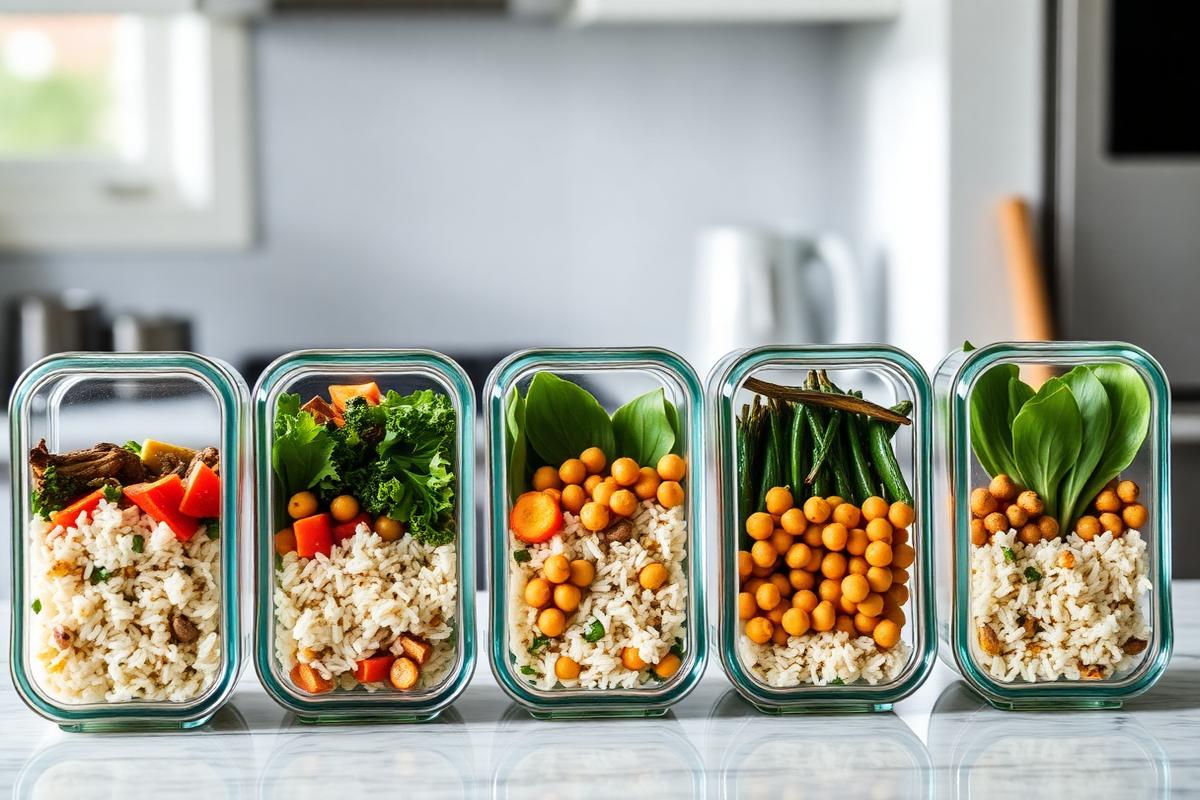
The alternative is component cooking. Instead of making five identical bowls of chicken and rice, you prepare the ingredients that can combine into multiple different meals. A pot of grain. A tray of roasted vegetables. A batch of protein. A dressing or sauce. Mixed differently each day, those four components produce meals that feel distinct even though the underlying prep was done once.
For plant-based cooking specifically, this approach is almost perfectly suited. Legumes, grains and roasted vegetables are more interchangeable than animal proteins. A batch of chickpeas works in a Mediterranean wrap on Monday, a curry on Wednesday and a grain bowl on Friday. You cook once and eat creatively all week.
The component system
The four components you need each week: a grain (rice, quinoa, farro or barley), a protein (lentils, chickpeas, baked tofu or cooked tempeh), a tray of roasted vegetables, and a punchy dressing or sauce. Mix and match all week for meals that feel fresh instead of repetitive. Ninety minutes on Sunday produces eight lunches ready to go.
Store grains and proteins separately from dressings until you are ready to eat — soggy meal prep is the number-one reason people stop. Keep dressings in separate small jars. Add greens fresh each day rather than wilting them in advance. This small discipline makes a significant difference to how enjoyable the meals are on Thursday and Friday.
A useful variation is the sauce-forward approach. Instead of dressing, prepare two or three different sauces — a tahini lemon, a miso ginger and a sriracha peanut, for example. The same grain bowl feels completely different with each sauce. Three sauces, one protein, one grain: nine different-tasting meals with one session of prep.
The Sunday prep session: a step-by-step guide
Allocate 90 minutes. Put on a podcast or music. This is a relaxed, low-stakes cooking session — not a high-pressure restaurant service.
Start by putting your grain on to cook — it needs the most time and requires the least attention. White rice takes 18 minutes. Brown rice takes 45 minutes. Quinoa takes 15 minutes. Farro takes 30 minutes. While the grain cooks, prepare your roasting vegetables: chop one or two trays of whatever needs using up — sweet potato, courgette, bell pepper, red onion, broccoli. Season with olive oil, salt, cumin and smoked paprika. Roast at 200°C for 25 minutes.
While both of those are running, prepare your protein. If using chickpeas, drain, dry and season two cans. If using tofu, press and cube one or two blocks. If using lentils, rinse and put on to simmer with vegetable stock and aromatics. Most of these run themselves — you are just managing timers.
In the last 20 minutes, make your dressings. Tahini lemon: four tablespoons tahini, two tablespoons lemon juice, one clove garlic, enough water to thin, salt to taste. Miso ginger: two tablespoons white miso, one tablespoon rice vinegar, one teaspoon sesame oil, one teaspoon fresh ginger, one teaspoon maple syrup. Blend or whisk each in a jar. They keep for a week in the fridge.
“Ninety minutes of calm Sunday cooking produces eight to ten meals. That is less time than two restaurant lunches, and a fraction of the cost.”
What keeps well in the fridge — and what doesn't
Grains keep for five days in a sealed container. Cooked legumes — lentils, chickpeas, black beans — keep for four to five days. Baked tofu keeps for four days and maintains its texture well. Roasted vegetables keep for four days but soften slightly; this actually works in their favour in warm grain bowls.
Leafy greens should be added fresh each day — washed, dried and stored separately in a container lined with paper towel. They wilt within one to two days once dressed. Avocado should be cut fresh daily. Tomatoes and cucumber hold for two to three days once cut.
Dressings and sauces keep for five to seven days in sealed glass jars. Tahini-based dressings thicken in the fridge — a splash of water stirred in before using brings them back to the right consistency.
If cooking for the full five days feels like too much planning, prep for three days and do a quick ten-minute top-up on Wednesday evening. Even partial prep is dramatically better than having nothing ready and defaulting to expensive, less nutritious takeaway.
A practical weekly prep rotation
Week 1: brown rice, baked tofu, roasted sweet potato and broccoli, tahini lemon dressing. Serve as bowls Monday and Tuesday. Wednesday: add curried chickpeas from a can for variety. Thursday and Friday: stir fry the remaining tofu and vegetables with soy sauce and noodles.
Week 2: quinoa, curried red lentils, roasted red pepper and courgette, miso ginger dressing. Serve as bowls Monday and Tuesday. Wednesday: wrap in a wholegrain tortilla with hummus and pickled veg. Thursday and Friday: add to a simple vegetable soup with vegetable stock.
Week 3: farro, white beans sauteed with garlic and lemon, roasted fennel and tomatoes, herb vinaigrette. Eat as a grain salad early in the week. Later in the week: serve over polenta or in a simple tomato-based pasta sauce.
Rotating the grain and protein each week prevents boredom and ensures a broader nutritional profile across the month. The sauce and dressing rotation does the most work for flavour variety.
Budget considerations for weekly prep
Plant-based meal prep is exceptionally cost-effective compared to any other approach to feeding yourself. A full week's lunch prep — grain, protein, vegetables, dressing — typically costs between $10 and $18 depending on the region and store.
Dry grains and legumes are significantly cheaper than canned. A kilogram of dry brown rice costs around $1.50 and produces multiple weeks of portions. A 500-gram bag of dry red lentils costs around $1.80 and produces eight to ten servings. For budget prep, build around these staples and use canned chickpeas and beans as a convenience option when time is short rather than as the primary protein.
Frozen vegetables are equally nutritious as fresh and substantially cheaper for roasting. Frozen broccoli, peas, edamame and spinach are all excellent in prep cooking. Do not overlook them in favour of premium fresh produce — from a nutritional perspective, frozen is often superior because it is flash-frozen at peak ripeness.
“The week you have prepped is the week you eat well, spend less and waste nothing. The week you haven't is the week you buy expensive sandwiches and feel guilty about it.”