Shopping
Vegan Grocery List for Beginners: Everything You Actually Need
A clear, no-overwhelm starter list of pantry staples, fresh produce and plant proteins for your first plant-based shop — plus what to skip.
Why your pantry is the real foundation
The secret to eating well on a plant-based diet is having the right things on the shelf. A stocked pantry means you can throw together a nutritious meal in 20 minutes without thinking — no recipe needed. Dry ingredients store for months and cost a fraction of fresh food, so investing in them upfront pays off every week after.
The five pantry categories you need: a grain (rice, oats, pasta, farro), a legume (lentils, chickpeas, black beans), a fat (olive oil, tahini, peanut butter), a flavour base (soy sauce, tomato paste, garlic, cumin, smoked paprika), and a liquid (vegetable broth, coconut milk). Everything else is optional.
Think of the pantry as your insurance policy. When you come home exhausted on a Tuesday evening with no plan, a stocked pantry means dinner is 20 minutes away. Without it, that Tuesday evening becomes a takeaway order that costs ten times more and provides less nutrition.
The starter pantry list
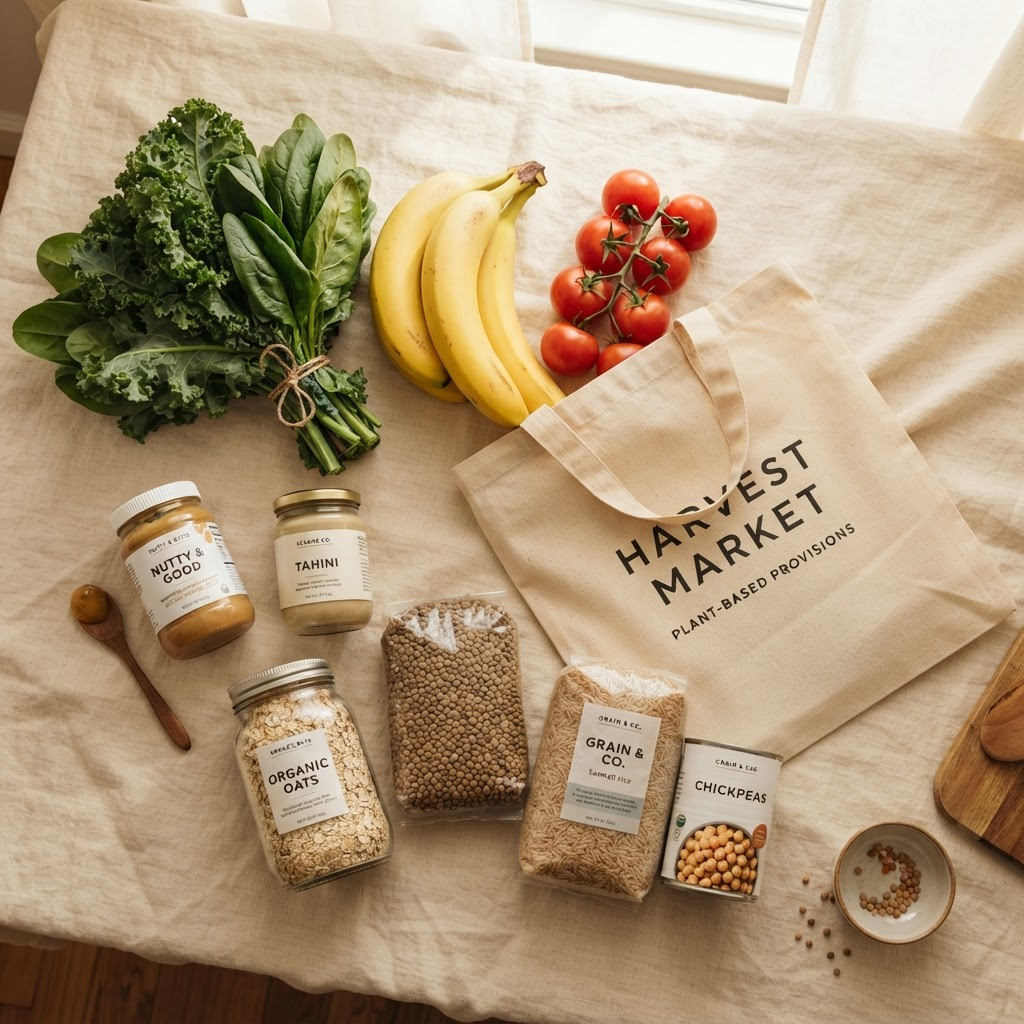
Grains: rolled oats, brown or white rice, pasta, one wholegrain bread loaf. Legumes: one bag of dry red lentils, one bag of dry chickpeas or a few cans, one can of black beans. Fats and spreads: extra-virgin olive oil, natural peanut butter, tahini. Flavour: low-sodium soy sauce or tamari, tomato paste, one can of coconut milk, vegetable stock cubes. Spices: cumin, smoked paprika, garlic powder, onion powder, turmeric, chilli flakes, nutritional yeast.
Nutritional yeast deserves emphasis. It is the one pantry item most beginners skip and then wonder why their food tastes flat. Add a tablespoon to pasta, soups, scrambles and popcorn. It provides a savoury, cheese-adjacent flavour, adds umami depth to any dish and is a reliable source of B vitamins. Buy it on your first shop.
Total cost at most supermarkets: $25–$35 and these staples will last two to three weeks. After the first shop, you mostly top up fresh produce and replace what you have used.
“Nutritional yeast is the one pantry item most beginners skip and then wonder why their food tastes flat. Add a tablespoon to pasta, soups and scrambles.”
How to build your spice collection affordably
A well-chosen spice collection is the difference between food that is nutritious but dull and food that is nutritious and genuinely enjoyable. You do not need dozens of spices — five or six core spices cover the flavour profiles of most world cuisines.
Start with: cumin (earthy, warm — essential for Indian, Mexican and Middle Eastern cooking), smoked paprika (adds depth and a subtle smokiness to almost anything), garlic powder (a shortcut to garlic flavour when you want convenience), turmeric (anti-inflammatory, earthy, adds colour to scrambles and soups), ground coriander (citrusy warmth, pairs perfectly with cumin), and chilli flakes or cayenne for heat.
Buy spices from the ethnic food aisle or a dedicated spice shop rather than branded supermarket jars. The quality is identical or better, and the price can be 60–80% lower. A 200g bag of cumin from an Indian grocer often costs less than a 40g jar from a supermarket spice brand. Once you have the basics, add one new spice per month — ras el hanout, five-spice, cardamom, sumac — and your cooking will evolve naturally.
Fresh produce: keep it seasonal and simple
For your first shop, buy a small range of versatile vegetables rather than trying to stock everything. Onions, garlic, carrots and celery form the base of almost any savoury dish. Add a leafy green (spinach or kale), two or three other vegetables you already like (broccoli, bell peppers, courgette), and a starchy vegetable (sweet potato or regular potato).
Fruit: bananas are the best value and the most useful — they go in smoothies, overnight oats and as a snack. Add whatever is in season locally. Berries, if in season, are excellent in oats. One or two avocados add richness to wraps and grain bowls.
Seasonal shopping matters for both cost and flavour. Strawberries in January and asparagus in November are expensive and tasteless because they have been grown in suboptimal conditions or transported great distances. The same vegetables in their natural season cost half as much and taste dramatically better. If you are new to seasonal shopping, a quick online search for your region's seasonal produce calendar is a useful reference.
Do not overlook frozen vegetables. Frozen peas, edamame, broccoli, spinach and corn are nutritionally equivalent to fresh — often superior because they are frozen at peak ripeness. They are cheaper, produce zero waste and are available year-round at consistent quality. For cooked applications like soups, curries and stir-fries, frozen is often the smarter choice.
Plant proteins to buy every week
Tofu: buy one block of firm tofu. Press it for 15 minutes using a clean tea towel and a heavy object, cube it, toss with soy sauce, a little oil and cornstarch, and bake at 200°C for 25 minutes. The result is golden, crispy on the outside and chewy inside — versatile in stir-fries, grain bowls and wraps. It keeps in the fridge for four days once cooked.
Tempeh: nuttier and denser than tofu, with more protein per gram and a better amino acid profile because of fermentation. Slice it thin, marinate in soy sauce, maple syrup and garlic for 20 minutes, then pan-fry for three minutes each side. It has a rich, savoury flavour that works in sandwiches, grain bowls and stir-fries.
Edamame: frozen edamame pods are one of the cheapest and most nutritionally complete proteins available. They go directly from frozen into noodle dishes, rice bowls or a bowl of salted water as a snack. Complete protein, high in fibre, and genuinely delicious with a squeeze of lime and a pinch of sea salt.
Lentils from the pantry do the heavy lifting for the rest of the week. Red lentils dissolve into creamy soups and dals. Green and brown lentils hold their shape for grain salads, bolognese and patties. They require no soaking, cost very little and are among the most nutritious foods available.
What to skip on your first shop
Vegan meat alternatives are expensive, highly processed and rarely necessary when you are still learning the basics. Skip them for the first month and save the money for better produce and pantry staples. They have a role in an established plant-based diet — they are convenient, taste good and work well socially — but starting with them before mastering the fundamentals is like learning to drive in a sports car.
The same applies to most vegan cheeses. They are pricey for what they are, and the quality varies enormously by brand. Nutritional yeast and cashew cream (soaked cashews blended with water) deliver similar functionality at a fraction of the cost once you know how to use them.
Specialty items like aquafaba, jackfruit, seitan and coconut aminos are worth exploring once you have the foundations in place. For the first shop, keep it practical. The goal is to have enough ingredients to cook simple, nutritious meals without overthinking it.
“A boring pantry is a fast pantry. The goal is not to impress anyone — it is to be able to cook without thinking on a Tuesday night.”
A sample first-week shopping list
Dry goods: rolled oats 1 kg, brown rice 1 kg, red lentils 500 g, canned chickpeas 2 tins, canned black beans 1 tin, pasta 500 g, wholegrain bread 1 loaf, peanut butter, tahini, olive oil, soy sauce, tomato paste, coconut milk 1 tin, vegetable stock cubes, nutritional yeast.
Spices (if you do not have them): cumin, smoked paprika, garlic powder, turmeric, chilli flakes.
Fresh: onions 1 kg bag, garlic 1 bulb, carrots 500 g, spinach 1 bag, broccoli 1 head, sweet potato 2 medium, bell peppers 2, bananas 1 bunch, seasonal fruit whatever looks good.
Protein: firm tofu 1 block, edamame frozen 400 g.
Dairy alternatives: plant milk 1 litre (oat or soy recommended).
Total: approximately $38–$45 depending on your store and region. After week one, most of the dry goods do not need replacing and your weekly cost drops to $20–$28 for fresh produce and protein top-ups.
Reading labels: what to look for on packaged plant foods
Not all plant-based packaged foods are equally nutritious. Some — like plain tofu, canned chickpeas and unsweetened oat milk — are minimally processed and nutritionally excellent. Others — like some vegan meat alternatives, flavoured plant milks and vegan snack bars — can be high in sodium, added sugars or refined oils.
When reading labels, prioritise: a short ingredients list with recognisable ingredients; sodium under 600mg per 100g for savoury products; added sugar under 5g per 100g for products that are not desserts; and protein content proportional to the food's role in your diet. A tofu block with 10g protein per 100g is a protein food. A plant milk with 0.3g protein per 100g is a liquid, not a protein source.
Fortification matters for plant milks and yoghurts. Look for products fortified with calcium (120mg per 100ml is comparable to dairy), vitamin D, vitamin B12 and iodine. Not all brands include all of these — check the label. Unsweetened versions are better for general cooking and cereal; barista versions are specifically formulated for steaming and frothing.