Nutrition
Vegan Deficiencies Explained: What to Actually Watch
B12, iron, omega-3, vitamin D, calcium and zinc — which nutrients actually need attention on a plant-based diet, what the science says, and how to get them reliably.
The honest picture
Plant-based diets done well are associated with lower rates of heart disease, type 2 diabetes and certain cancers. The evidence base for these benefits is substantial and comes from large, long-term population studies — not cherry-picked research or industry funding. A well-planned plant-based diet is one of the most health-promoting dietary patterns available.
But no diet is nutritionally complete without some thought, and veganism has a short list of nutrients that require deliberate attention. The good news: that list is short, well understood, and manageable with a combination of food choices and one or two supplements.
The nutrients worth understanding: vitamin B12, vitamin D, long-chain omega-3 fatty acids (EPA and DHA), iron, calcium, iodine and zinc. Of these, B12 is the only one that is effectively impossible to get reliably from a whole-food plant-based diet without supplementation. Everything else can be covered with food if you plan it — but for most people, one or two targeted supplements provide a reliable safety net.
Vitamin B12 — the one non-negotiable supplement
B12 is produced by bacteria in soil and water, not by animals. Animals accumulate B12 in their tissues by eating these bacteria or absorbing them through their digestive environment — which is why meat and dairy end up rich in it. Modern food production and hygiene standards mean plant foods contain essentially none, because the soil bacteria that once contaminated plant surfaces are now washed away.
Without adequate B12, the consequences are serious: nerve damage, megaloblastic anaemia and cognitive decline. Deficiency develops slowly because the liver stores a reserve that lasts one to three years, which means symptoms can appear years after someone transitions to a plant-based diet — long after the connection is obvious.
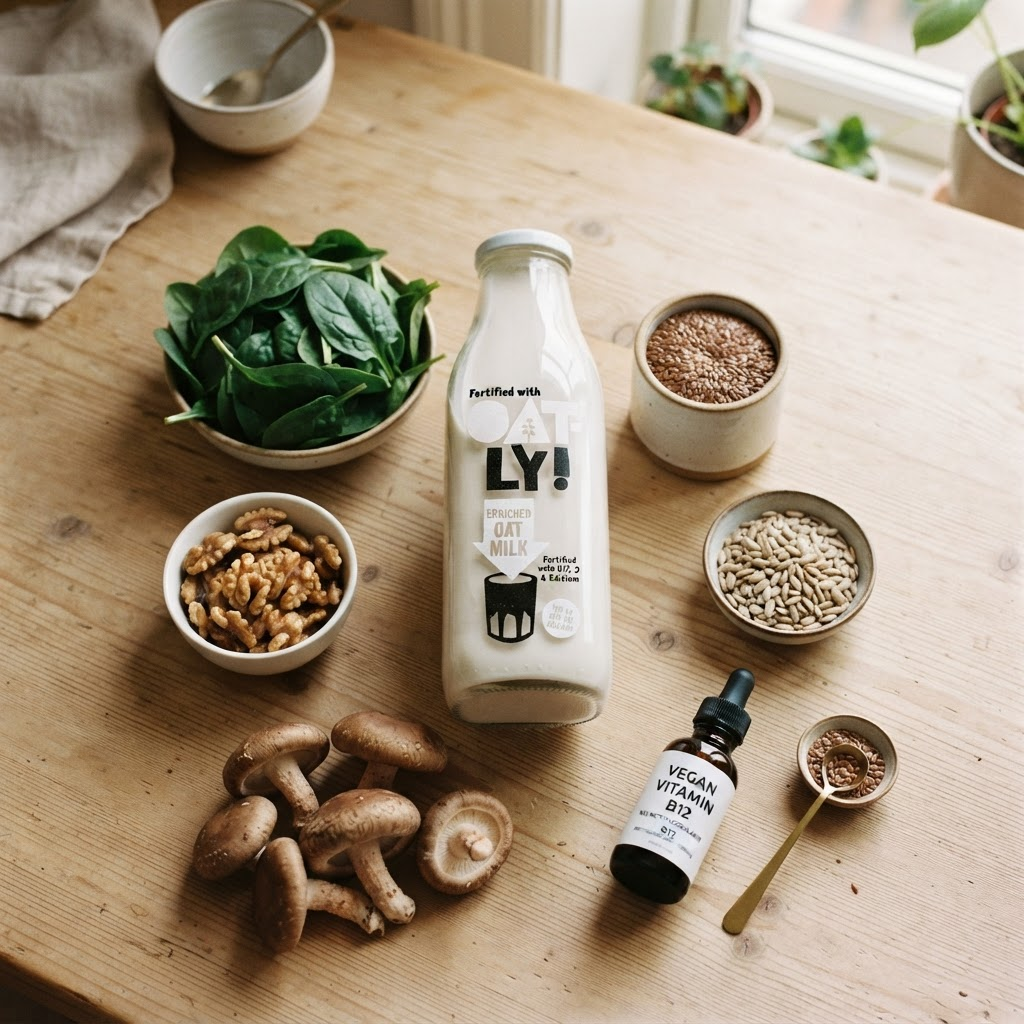
The fix is straightforward: supplement. The NHS, Vegan Society and most dietetic bodies recommend either a daily low-dose supplement (50–100 mcg cyanocobalamin) or a weekly high-dose option (2,000–2,500 mcg). Both work equally well because cyanocobalamin is converted to the active form of B12 in the body. Fortified plant milks, nutritional yeast and breakfast cereals contain B12, but relying on food alone requires consuming multiple servings every day consistently — a supplement is more reliable and more affordable.
“B12 is the one supplement every vegan should take, no exceptions. Everything else is diet-dependent — B12 is not.”
Vitamin D — relevant for most people, not just vegans
Vitamin D deficiency is widespread in the general population, not just among vegans, because most people do not get enough sun exposure year-round. The body synthesises vitamin D through UVB exposure on the skin — approximately 15–20 minutes of direct midday sun on arms and legs is sufficient in summer at mid-latitudes. In northern latitudes (the UK, Canada, northern Europe) from October to March, the sun angle is too low to trigger synthesis regardless of time spent outside.
The primary dietary sources of vitamin D are fatty fish and egg yolks — both of which vegans avoid. However, sun exposure remains the main route regardless of diet. The practical implication is the same for most people: supplement in the winter months.
Most vitamin D3 supplements are derived from lanolin (sheep's wool) — but vegan D3 made from lichen is widely available and equally effective. 1,000–2,000 IU daily is the standard recommendation from October to April; your GP can test your levels with a simple blood test and advise whether you need more. Fortified plant milks and UV-exposed mushrooms contribute dietary vitamin D, but supplementation is the most reliable approach through winter months.
Note that vitamin D2 (found in some fortified foods) is vegan but less effective than D3 at raising blood levels. If supplementing, choose a vegan D3 from lichen for maximum efficacy.
Omega-3 fatty acids — ALA, EPA and DHA
There are three omega-3 fatty acids that matter for human health: ALA (alpha-linolenic acid), EPA (eicosapentaenoic acid) and DHA (docosahexaenoic acid). ALA is found abundantly in plant foods — flaxseeds, chia seeds, walnuts and hemp seeds are all excellent sources. A tablespoon of ground flaxseed provides around 2.4 grams of ALA — well above the recommended daily intake.
EPA and DHA are the long-chain forms that the brain, cardiovascular system and eyes use most directly. The body can convert ALA to EPA and DHA, but the conversion rate is low — typically 5–10% for EPA and 1–5% for DHA — and is further reduced by high omega-6 intake (common in Western diets), stress, ageing and certain genetic variants.
The plant-based solution is algae oil. Fish get their EPA and DHA by eating algae — going straight to the source makes evolutionary and environmental sense. Algae oil supplements providing 200–300 mg of combined EPA and DHA daily are widely available, reasonably priced and have been shown in clinical studies to raise blood levels comparably to fish oil. They are the recommended DHA and EPA source for plant-based eaters.
“Eat flaxseeds or chia daily for ALA, and take an algae oil supplement for EPA and DHA. That is the whole omega-3 strategy.”
Iron — the plant-based version is different
Iron comes in two forms: haem iron (from meat) and non-haem iron (from plants). Non-haem iron is less bioavailable — the body absorbs around 2–20% depending on context, compared to 15–35% for haem iron. This does not mean plant-based eaters are iron-deficient; it means eating more iron-rich plants and being smart about absorption are important habits.
Top plant sources of iron: lentils and other legumes, tofu, tempeh, pumpkin seeds, cashews, fortified cereals, quinoa, dark leafy greens (cooked spinach, kale, Swiss chard), dried apricots and dark chocolate. Iron requirements for women of reproductive age are higher than for men — 14.8 mg per day compared to 8.7 mg — so women on plant-based diets should pay particular attention.
The critical absorption strategy: eat iron-rich plant foods alongside a source of vitamin C. Vitamin C dramatically increases non-haem iron absorption — a squeeze of lemon over lentils, a bell pepper in a chickpea curry, or tomatoes in a lentil soup can increase iron absorption by two to six times. Conversely, avoid drinking tea or coffee with your main iron-rich meal, as tannins and polyphenols in both inhibit absorption significantly. Cooking in a cast iron pan adds a small but meaningful and consistent boost.
Most plant-based eaters who eat varied, legume-rich diets with good vitamin C sources maintain normal iron levels. Annual blood tests — which most GPs offer — are the simplest way to monitor your status.
Calcium — not just about milk
Calcium is available in many plant foods, but bioavailability varies considerably. Dairy calcium is absorbed at around 30–35%. Calcium from low-oxalate plant sources like kale, bok choy, broccoli, fortified plant milks and calcium-set tofu is absorbed at comparable or higher rates — kale calcium, for example, is absorbed at around 50%. High-oxalate foods like spinach and beet greens contain calcium but absorb poorly; this is why eating spinach alone is not a reliable calcium strategy despite its impressive label.
Fortified plant milks typically provide 120 mg of calcium per 100 ml — equivalent to dairy. Calcium-set tofu (look for calcium sulphate or E516 on the label) can provide 200–300 mg per serving. Other reliable sources: almonds (76 mg per 30g), sesame seeds and tahini (a 30g serving of tahini provides around 130 mg), white beans (130 mg per 100g cooked), and navy beans.
The target is 700–1,000 mg per day for most adults, rising to 1,000–1,200 mg for women over 50 and men over 70. Two to three servings of fortified plant milk or yoghurt combined with one or two of the food sources above gets most people there comfortably. Vitamin D is essential for calcium absorption — another reason D supplementation matters alongside calcium intake.
Iodine and zinc — the often-forgotten two
Iodine is crucial for thyroid function — it is used to synthesise thyroid hormones that regulate metabolism, growth and development. In omnivore diets, iodine comes mainly from seafood and dairy (the latter largely because iodine-containing cleaning agents are used in dairy farming, not because dairy is inherently rich in it). Plant foods are generally low in iodine because most soils are iodine-depleted.
Seaweed contains iodine but in highly variable and sometimes dangerously high amounts — nori is relatively mild, but kelp and hijiki can provide hundreds of times the recommended intake, potentially suppressing thyroid function. Seaweed is not a reliable everyday iodine source. The most consistent plant-based options are iodised salt (a quarter teaspoon provides approximately 150 mcg, the full daily requirement) or a dedicated supplement. Many plant milks are now fortified with iodine — check labels, as it is not universal.
Zinc is found in legumes, seeds, nuts and wholegrains, but phytates in these same foods bind to zinc and reduce absorption. The solution: soak or sprout beans and seeds before cooking, which degrades phytates significantly. Fermentation (as in tempeh and sourdough) also reduces phytates. Plant-based eaters generally have adequate zinc status if they eat a varied diet with regular legumes, seeds and wholegrains, but those on restricted diets or with digestive issues may want to monitor levels annually.
The practical supplement stack
For most vegans eating a reasonably varied whole-food diet, the practical minimum supplement regimen is: one B12 supplement daily (50–100 mcg cyanocobalamin), one vitamin D supplement daily from September to April (1,000–2,000 IU, ideally as vegan D3 from lichen), and an algae omega-3 oil providing 200–300 mg combined EPA and DHA.
If you eat little or no iodised salt and do not regularly use fortified plant milks, add a kelp-free iodine supplement providing around 150 mcg daily. If you are a woman of reproductive age with heavy periods or high athletic demand, iron levels are worth monitoring through an annual blood test — supplement only if a deficiency is confirmed, as excess iron can be harmful.
Total monthly cost of this stack: approximately $15–$25 depending on brand and country. This is a small investment relative to the health insurance it provides. Most well-designed supplements contain multiple nutrients in appropriate doses — look for a vegan multivitamin that includes B12, D3, iodine and zinc, and add algae oil separately.
“A plant-based diet that includes a B12 supplement, regular D3, algae oil and iodised salt covers virtually every known nutritional concern. The rest is just varied, enjoyable whole-food eating.”
When to get blood tests — and what to ask for
Blood testing is the only way to know your actual nutrient status. Symptoms of deficiency are often vague and shared by many conditions — fatigue, brain fog, muscle weakness and low mood are associated with B12, D, iron and omega-3 deficiency, but also with stress, sleep deprivation and dozens of other factors. Testing removes the guesswork.
When visiting your GP for a plant-based diet check, ask for: full blood count (screens for anaemia and B12 or folate deficiency), ferritin (iron stores — more informative than serum iron alone), vitamin B12 and folate, serum 25-hydroxyvitamin D, and thyroid function (which screens indirectly for iodine status). Some GPs offer zinc testing but it is less routinely available.
Annual testing is a reasonable frequency for most healthy plant-based adults. If you are newly transitioning, a test after six to twelve months establishes a baseline. If results are normal and your diet and supplementation regimen are consistent, you may not need to test every year — your GP can advise.
Many plant-based athletes, pregnant women and people over 50 benefit from more frequent testing because their nutritional demands are higher. Pregnancy in particular requires careful monitoring — vegan pregnant women should work closely with a registered dietitian or their midwife to ensure optimal intake of B12, D, iodine, iron, choline and DHA.