Featured guide
A Beginner's Guide to Going Vegan in 7 Days
A gentle, day-by-day plan for switching to a plant-based diet without stress or overwhelm.
Why most people quit — and how this plan is different
The single biggest reason people abandon a plant-based diet in the first two weeks is not missing meat. It is the overwhelming feeling of not knowing what to eat — opening the fridge and finding nothing that seems straightforward, standing in a supermarket aisle paralysed by ingredients, or spending an hour cooking something that tastes flat and disappointing. This plan is designed to remove all of that.
Instead of asking you to change everything overnight, this seven-day plan introduces one small change per day, building on what you already know and eat. By day seven, you will have all the tools, habits and pantry staples to maintain a plant-based lifestyle without daily effort. The goal is not perfection — it is momentum.
A note on nutrition before you start: this plan is about transitioning, not optimising. Focus on eating enough, eating varied and enjoying the process. Full nutritional guidance — including B12 and other key nutrients — is covered in our dedicated nutrition guides.
Day 1 — Swap your breakfast
Breakfast is the easiest meal to convert because most of us eat the same thing every day. Replace dairy milk with oat, soy or almond. Oat milk is the most popular choice for coffee and cereal because of its neutral, slightly sweet flavour. Soy is the best nutritional match for dairy, with comparable protein. Almond is light and good for smoothies.
Trade eggs for a tofu scramble or overnight oats with peanut butter and banana. Tofu scramble takes under ten minutes: crumble firm tofu into a pan with a little oil, add turmeric for colour, nutritional yeast for a savoury depth, salt, pepper and garlic powder. Eat it on toast. That is it for day one — lunch and dinner stay exactly as they are.
Why breakfast first? Because changing one meal at a time is psychologically much easier than changing all three. You will feel a small win on day one, which makes day two feel achievable.
Day 2 — Add one plant-based lunch
Pick a lunch you already love and find its plant version. A grain bowl with rice, roasted veg and hummus. A hearty lentil soup with sourdough. A wrap with black beans, avocado and salsa. Pasta with marinara and a handful of spinach. Most cuisines already have dozens of plant-based dishes that are not trying to imitate meat — they simply are not built around it.
Cook once, eat twice — the leftovers become tomorrow's lunch. This is not just about convenience; it is a foundational habit. Plant-based cooking is disproportionately rewarding when batched, because the same pot of lentil soup gets better on day two, and the grain bowl components are faster to assemble the second time.
If you are eating at a desk or need something grab-and-go, hummus and vegetable wraps require zero cooking. A banana with peanut butter and a handful of nuts is a complete, sustaining lunch on a busy day.
Day 3 — Learn one hero protein
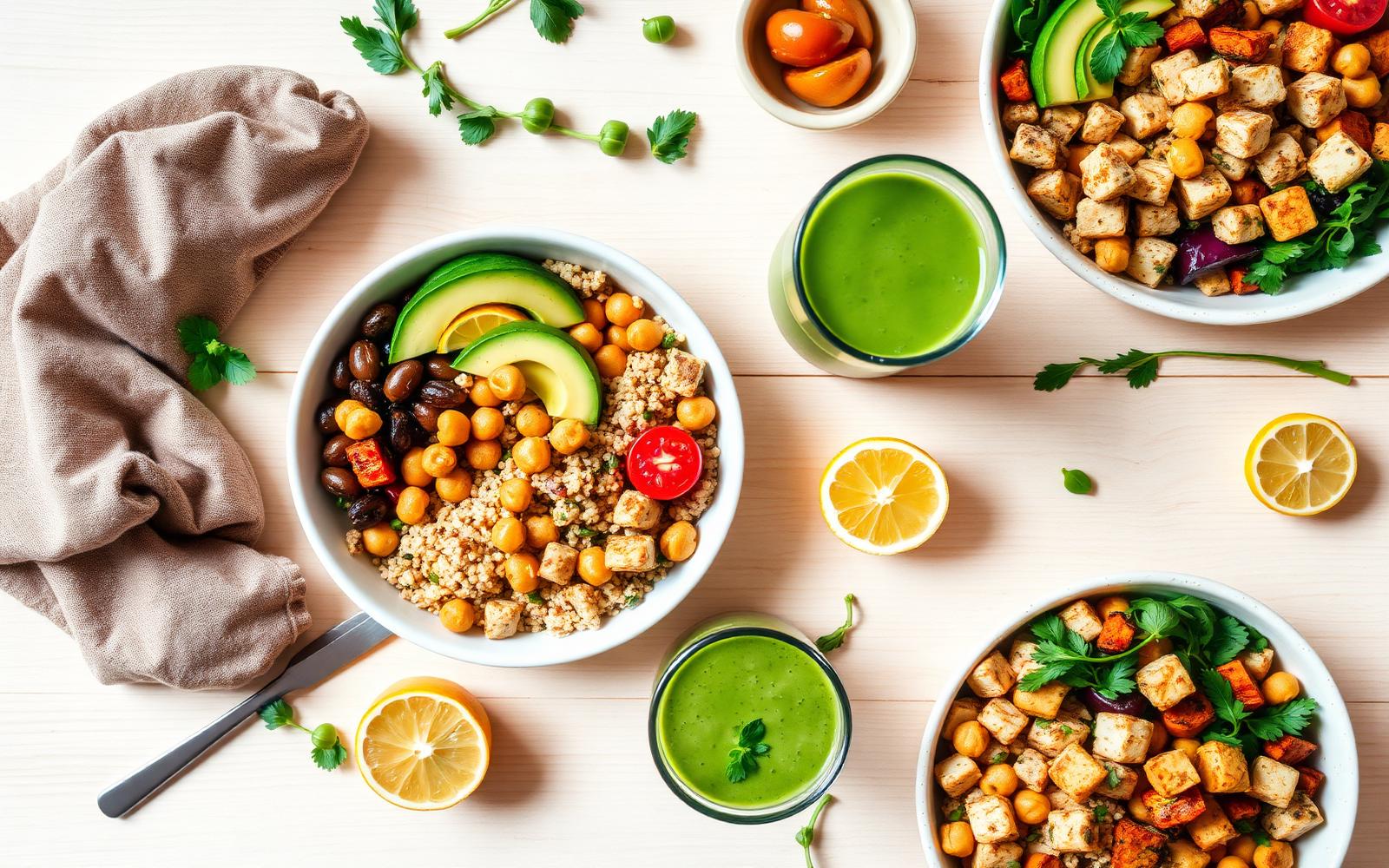
On day three, pick one protein and get comfortable with it. Most beginners start with either crispy baked tofu or seasoned chickpeas — both are cheap, forgiving, and go with almost any cuisine. Spend 30 minutes making a big batch. You will use it for the rest of the week.
For crispy baked tofu: press a block of firm tofu for 15 minutes using a clean tea towel and something heavy. Cut into cubes. Toss with soy sauce, a little oil and cornstarch. Bake at 200°C for 25 minutes, flipping once. The result is golden, chewy and almost addictive. It keeps in the fridge for four days.
For seasoned chickpeas: drain and dry two cans well. Toss with olive oil, smoked paprika, cumin, garlic powder and salt. Roast at 190°C for 20–25 minutes until crispy. Eat as a snack, in wraps, over salads or in curries.
Understanding why proteins matter helps here. Plant proteins are complete when combined across the day — your body maintains a pool of amino acids that it draws from across multiple meals, so you do not need to combine proteins at every sitting. Eat varied, eat regularly, and protein takes care of itself.
“Don't try to become a vegan chef. Just learn five recipes you love and rotate them for a month. Everything else follows from there.”
Day 4 — Stock the pantry
A well-stocked plant-based pantry makes weeknight cooking trivial. This is the day to spend twenty minutes at the supermarket picking up the basics that will underpin the next six months of cooking.
Aim for: dried lentils and beans, canned chickpeas and black beans, brown rice, oats, pasta, tomato paste, coconut milk, tahini, peanut butter, soy sauce, cumin, smoked paprika, garlic powder, nutritional yeast. Total cost at most supermarkets: under $30, and it lasts for weeks.
Nutritional yeast deserves special mention because it is the one ingredient most beginners skip and then wonder why their food tastes flat. It has a savoury, slightly cheesy flavour that lifts everything from pasta to scrambled tofu to popcorn. It also provides B vitamins. Buy it, use it everywhere, thank yourself later.
Coconut milk is the secret to creamy curries and soups without any dairy. Tahini is the base of hummus, but also an excellent dressing ingredient when thinned with lemon juice, garlic and water. These two ingredients transform simple vegetables into proper meals within minutes.
Day 5 — Try a plant-based dinner classic
Cook one dinner that would traditionally have meat, but plant-based. Chili with black beans instead of ground beef. Bolognese with lentils instead of mince. Tacos with walnut and mushroom filling. Dal with red lentils and coconut milk. You will be surprised at how little you miss the original.
Lentil bolognese is worth trying early because it converts the most sceptical eaters. Brown lentils have a meaty texture when cooked correctly. Cook them with carrot, celery, onion, garlic, tomato paste, canned tomatoes and a splash of red wine or balsamic vinegar. Let it reduce for 30 minutes. Serve over pasta with nutritional yeast dusted on top. It tastes like Italian Sunday cooking.
The key insight from this day is that most beloved dishes are beloved because of the sauce, the spices and the technique — not the animal protein itself. Swap the protein, keep everything else. The dish survives. Often it improves.
Day 6 — Batch cook for the week ahead
Spend 90 minutes on a Saturday or Sunday cooking: a pot of grains, a tray of roasted vegetables, a pot of beans or lentils, and a jar of dressing. That is the entire next week's lunches built from mix-and-match components — probably eight meals for the price of one restaurant lunch.
The component method is the most important habit in plant-based cooking. You are not making specific dishes — you are cooking building blocks. Roasted sweet potato, cherry tomatoes and red onion. A pot of brown rice. A batch of curried chickpeas. A lemon tahini dressing in a jar. Every combination of those four things produces a different-feeling meal, even though the cooking was done once.
Pair your grains with something acidic (lemon juice, vinegar, pickled veg) and something rich (tahini, avocado, olive oil). Add fresh herbs if you have them. The formula is simple: grain + protein + roasted veg + acid + fat + something fresh. Adjust the spices and you have a different cuisine every day.
Day 7 — Go fully plant-based for the day
By day seven you already have the skills. Today, just do it — breakfast, lunch and dinner all plant-based. It will not feel dramatic because you have been practising all week. That is the whole trick: build the habit before you commit to the label.
Review what worked this week. Which meals did you genuinely enjoy? Which ingredients do you now reach for automatically? That is your real plant-based diet — not a rigid meal plan, but a set of habits and flavours that you have already proven you enjoy.
Going forward, do not overthink the social side. Most restaurants have multiple plant-based options now. Most cuisines are naturally heavy in vegetables and legumes. When you are cooking for others, lead with flavour, not with the label. The food speaks for itself.
Want the printable version of this plan plus 30 more meal ideas? Grab our full cookbook — the link is on the homepage.
What to do after day seven
The seven-day plan gave you the fundamentals. Now the goal is to expand your repertoire slowly and sustainably. Add one new recipe per week. Explore one new cuisine per month. Cuisines like Indian, Ethiopian, Japanese, Mexican and Middle Eastern are naturally rich in plant-based options — they were not designed around meat to the same extent as Northern European cooking.
Join communities that share recipes and experience — online groups, local meetups, or simply cooking with friends who are curious. Social eating makes any diet sustainable. Isolation makes it hard.
Track how you feel after two weeks. Most people report clearer skin, better digestion, more energy in the morning and a lighter feeling after meals. These are not imagined benefits — they are the predictable result of a diet lower in saturated fat and higher in fibre, vitamins and antioxidants. Use that momentum.
“After seven days you will not have become a perfect vegan. You will have become someone who knows how to eat plants. That is the only qualification you need.”